What is the Harlem Renaissance?
OVERVIEW
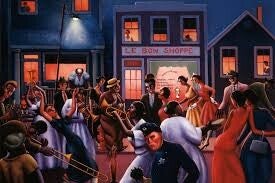
The Harlem Renaissance was a historical movement that was from 1919-1940 in the Harlem neighborhood in New York City. It was an era where African American writers, artist, musicians, and thinkers could express their creativity publicly to American society and changing racial norms. This movement is mostly famous for its creative uproar, celebrating black identity and black pride, and its social and political awareness. The Harlem Renaissance stands out so much because it didn't only focus on the economic and political status but it was a cultural rebirth. The Harlem Renaissance helped shape American society by using music, art, literature, and self-expression to become better. It was a unique movement because it changed american identity from the inside, influencing an artistic flow and laying out foundation for social justice improvement.
Meet The Pioneers of the Movement

Langston Hughes
Writer

Zora Neale Hurston
Novelist

Claude McKay
Poet

Countee Cullen
Poet
About us
Langston Hughes
Langston Hughes was one of the many writers during the Harlem Renaissance. He was known for his plays, poetry, essays, and novels that captured the experiences of Black Americans. He was born in Missouri 1902, he became famous for being able to blend poetry with blues and jazz, creating a new style called "jazz poetry". His work mostly focused on racial pride, the struggle of working class African Americans, and black identity. One of his most memorable works "The Negro Speaks Of Rivers" goes back to black history to the ancient world, while "Harlem (A dream Deffered) explores the consenqeuncs of what happens when people are denied opportunities. He created memorable characters is his short stories such as Jesse B Semple, who was humorous but a wise Harlem resident show spoke on racism and the everyday life. Through his art, Hughes speaks on the social problems such as discrimination, inequality, and segregation, while celebrating black culture.
Zora Neale Hurston
Zora Neale Hurston was a novelist, influential figure, and anthropologist in the Harlem Renaissance. She was born in Alabama 1891 and raised in Eatonville, Florida which was one of the first all black towns in the U.S. Hurston grew up mainly surrounded by African American traditions, stories, and folklore. She spent her life collecting stories as an anthropologist, in which helped influence her writing. "Their Eyes Were Watching God" her most famous novel, follows a black women, Janie Crawford, looking for independence and love which is now considered a American literature classic. Hurston's work highlights the strength of Black women and celebrates Black Southern culture while manuyb writers focused on urban racism. Hurston preferred emphasizing joy and individuality rather than focusing on pain. The famous line of Janie's reflection "There are years that ask questions and years that answer” shows her poetic style.
Claude McKay
Claude Mckay, a Jamaican born writer, his novels and poetry played a significant role in shaping the Harlem Renaissance. He was born in 1889, in 1992 he moved to the United States and became well known for his bold, political, and charged writing. McKay mainly addressed racism, the struggle of black identity, and violence in America. During the Red summer in 1919, where there was extreme racial violence that called for courage and resistance dealing with oppression. he wrote a poem "If We Must Die"The first line of the poem "If we must die, let it not be like hogs" which became a cry for Black activists. He also created themes that go back to immigrants, belonging, and identity. His novel "Home to Harlem" provided a vivid demonstration of Harlem nightlife and working class black people. He used literature to inspire racial pride and confront social injustice.
Countee Cullen
Countee Cullen was one of the celebrated poets of the Harlem Renaissance. He was known for his traditional, elegant style, and emotional depth. he was born in Kentucky 1903, raised in New York City. He became a literary star at such a young age. Cullen wrote in a more classical poetic form using sonnets to explore beauty, love, faith, and race. His poem "Color" addresses the racial injustice and the pain of discrimination all while demonstrating his artistry of formal poetry. One of his well known poems "Yet Do I Marvel" is about why God allows suffering of Black people all while celebrating the beauty of creation. He often wrote about the consequences of racism more than the political side, using his own experiences as his main source. He also made children's books and would translate french poetry. His brought a unique sense of perspective to the Harlem Renaissance, creating a good balance between tradition and black experience.